Curriculum
At the Greek School of Leeds "The Three Hierarchs," our curriculum takes students on a journey from their very first Greek words as young children through to nationally recognised qualifications as teenagers and young adults. We follow the curriculum framework set out for Greek schools of the Diaspora, aligned with the Common European Framework of Reference for Languages (CEFR) Αναλυτικά προγράμματα , ypostiriktiko_yliko_TEG.pdf as well as the curriculum developed for Greek community schools by the Cyprus Educational Mission analytiko-programma-gia-ta-ellinika-paroikiaka-scholeia.pdf. This ensures our teaching progresses consistently across age groups and prepares students for recognised examinations, including the Ellinomatheia certification, GCSE Greek, and A Level Greek (Pearson Edexcel) — for which our school operates as an official examination centre.
Our approach to language learning is holistic: while we prepare students thoroughly for examinations, our priority is not exam results alone but offering a secure, calm, creative, and inclusive environment in which students can genuinely thrive and develop confidence in their language and identity. At each stage, we focus on developing the four core language skills — listening, speaking, reading, and writing — through age-appropriate activities, structured progression, and clear learning outcomes. Alongside language learning, students explore Greek and Cypriot history, mythology, culture, and traditions, helping them build a lasting connection to their heritage.
Early Years Education
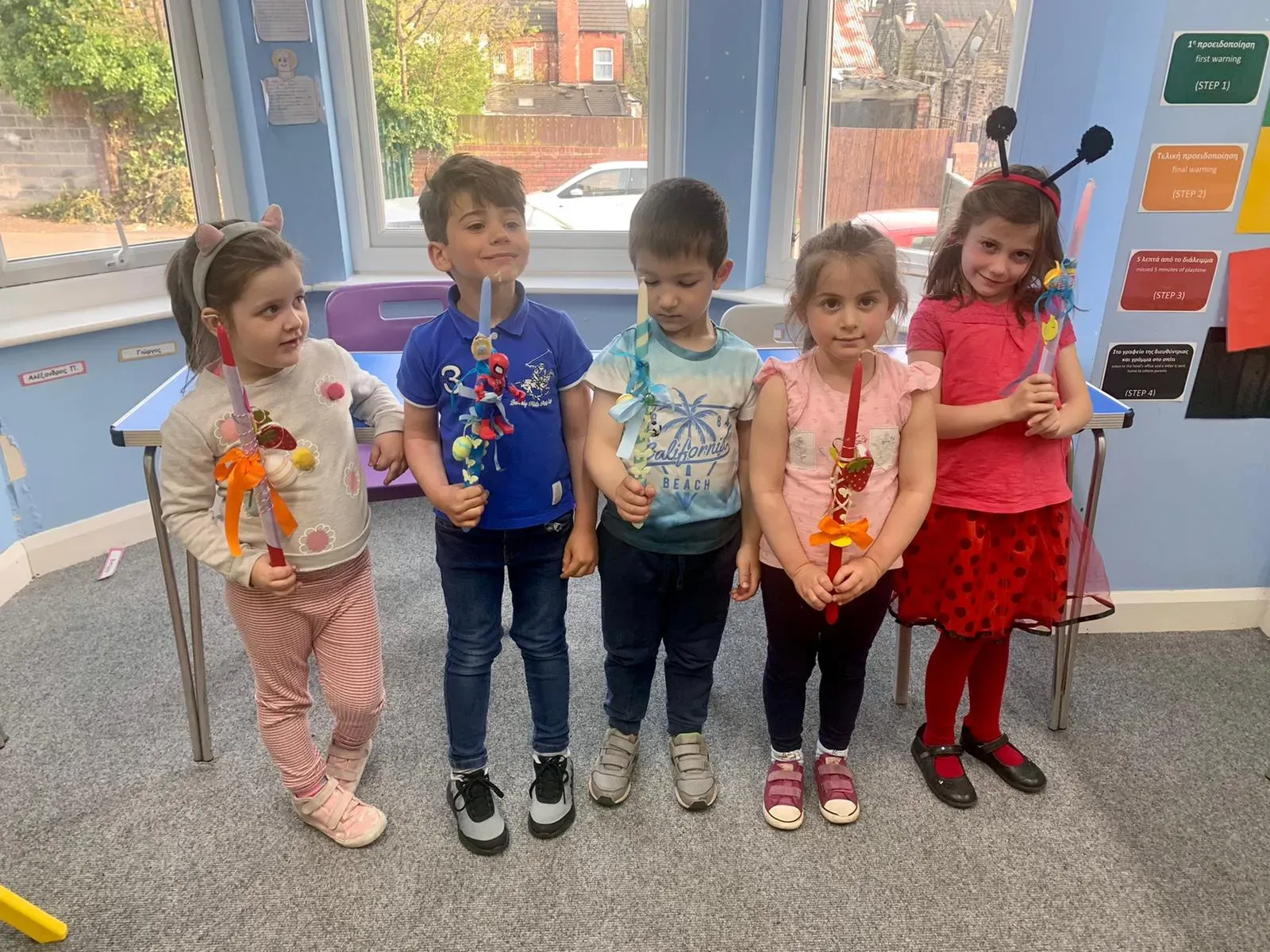
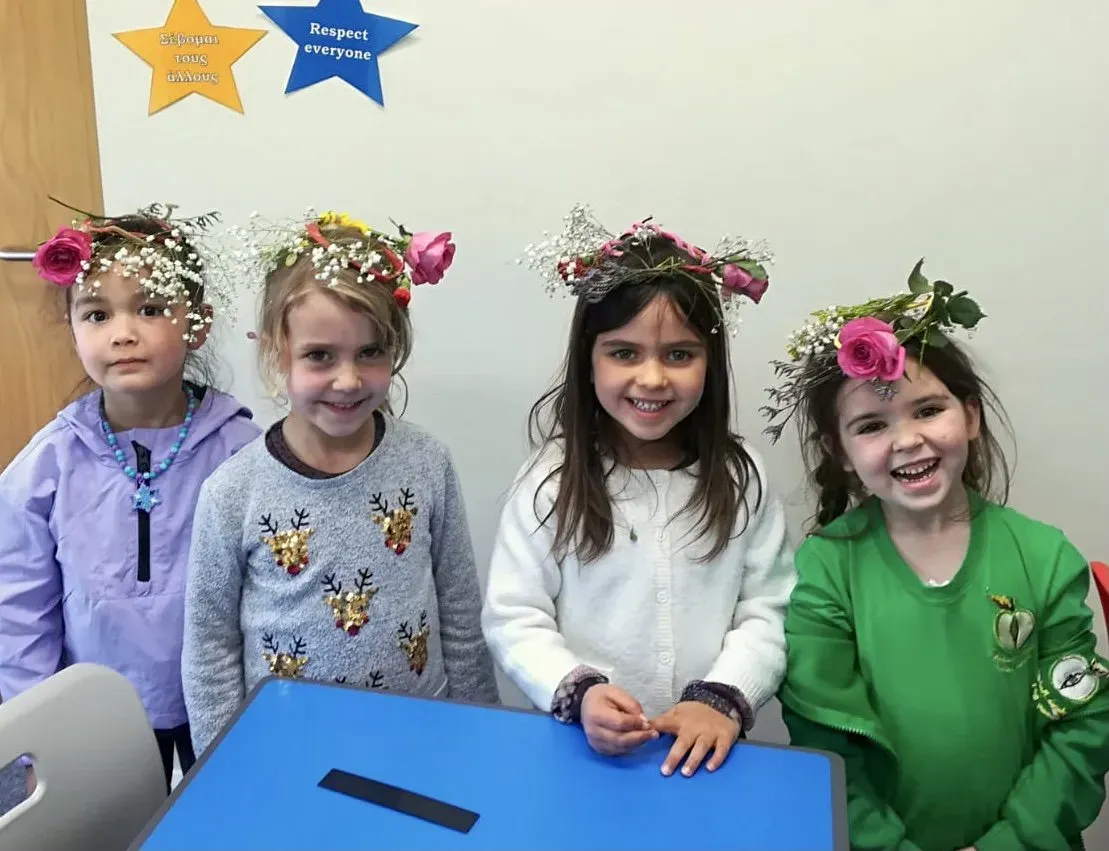
For over a decade, since 2013, we have welcomed children aged 4 to 6, introducing them to the Greek language and culture through our successful nursery classes for both Greek-speaking and English-speaking children. Learning takes place through singing, storytelling, arts and crafts, music, drama and a wide range of age-appropriate activities, within a safe, warm, and homely environment.
At this important stage, children learn predominantly through play, exploration, and discovery. Our approach focuses on building the foundations of basic communication in Greek while supporting personal, social and emotional development, and encouraging creativity, curiosity and self-expression. Through carefully designed thematic units, children develop a growing basic vocabulary and begin to communicate their thoughts and ideas in Greek, exploring the world around them and building confidence and imagination along the way.
We place particular emphasis on phonological awareness through activities such as letter and sound recognition, picture and word play, storytelling, helping children understand the relationship between spoken and written language in an enjoyable way. Early writing is introduced not as copying letters or words, but as a meaningful form of communication.
Our programme also nurtures children's wider social and emotional development, encouraging cooperation, confidence, and positive relationships through play, music, drama, and creative activities. Through this rich combination of language, culture, play and creativity, children take their first steps in Greek while building essential early literacy skills and a lasting connection to their heritage.
Years 1-2
Building on the foundations laid in Early Years, our Year 1 and 2 pupils focus on developing phonemic awareness alongside basic reading, writing, listening, and speaking skills. We use a variety of engaging activities — storytelling, rhymes, and gamified learning — to make Greek literacy both fun and effective, helping children build confidence as they take their first steps into structured language learning.
At this stage, our syllabus aims to familiarise pupils with everyday communicative situations, such as introductions and asking for information, along with the corresponding Greek vocabulary and grammar structures, so that they begin to develop basic communication skills and cultural awareness. Alongside this, pupils are introduced to wider forms of literacy, including early digital and numerical literacy, while cultivating a love of reading and becoming familiar with key elements of Greek and Cyprus culture. Students are also encouraged to draw connections between their experiences of Greek and English, helping to strengthen their understanding of both languages.
Years 3 & 4 (A1)
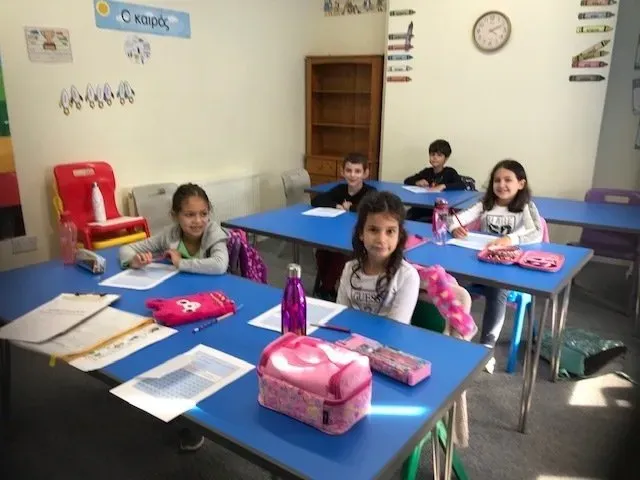
Pupils build steadily on their literacy and language skills, mastering key knowledge while developing consistent spelling patterns and grammar. Vocabulary expands into topics such as celebrations, weather, emotions, nature, and hobbies, alongside a wider range of tenses, noun-adjective agreement, and simple conjunctions to form more complex sentences. Reading comprehension grows through longer fiction and non-fiction texts, and writing develops from short paragraphs into more structured pieces. Speaking and listening skills are strengthened through conversation and exposure to spoken Greek, alongside a deepening awareness of Greek and Cypriot culture, festivals, and history. By the end of this stage, students should be able to understand and speak basic Greek, using and building on their growing vocabulary and grammar. They can understand and use familiar, everyday expressions and simple phrases to meet immediate needs, introduce themselves and others, and ask and answer basic personal questions — such as where they live, people they know, and things they have. This stage prepares pupils for the Ellinomatheia A1 examination for children aged 8–12.
Years 5 & 6
By Years 5 and 6, pupils have already built a strong foundation in vocabulary and grammar and are ready to begin working towards their future exams, aiming to sit the Ellinomatheia A2 examination by the end of Year 6. Students continue to expand their understanding and use of Greek through a wider range of themes in both speaking and writing, developing the vocabulary and grammar needed to communicate confidently about daily life and frequently used expressions related to matters of immediate relevance — such as personal and family information, shopping, local geography, and employment. Speaking and listening skills are strengthened so that pupils can follow and take part in everyday spoken and verbal exchanges with growing confidence. By the time they finish Year 6, students should be confident using active and passive voice, along with most grammar tenses, including indirect speech, the imperative and subjunctive moods, compound forms, and conditionals. Pupils learn to both decode and compose a variety of text types, including letters and emails, diary and blog entries, short advertisements, articles, advertising leaflets, dialogues and discussions, and surveys — building the reading and writing versatility needed for the next stage of their Greek learning.
History and mythology
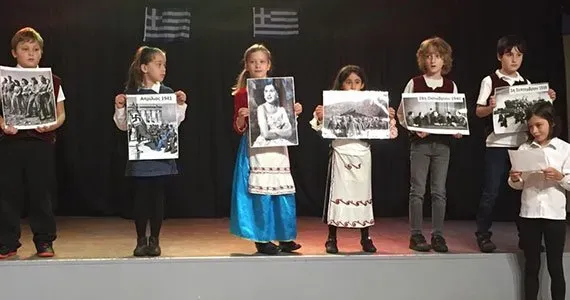
Throughout their years at our school, pupils journey through Greek history — from the ancient world to the modern history of Greece and Cyprus, including the Ottoman occupation and the long, ongoing struggle for liberation, independence and national integration, a struggle that continues today, as reflected in the current situation in Northern Cyprus. We also dedicate lessons to learning about, remembering, and honouring significant moments in our national history, such as Oxi Day, the start of the Greek War of Independence, the Asia Minor Catastrophe, and the Pontic Genocide — helping pupils understand these events with sensitivity, while nurturing empathy and mutual understanding. Greek mythology also has a regular place in our teaching: timeless stories of gods and heroes such as Hercules, Theseus, Perseus and Jason, which have inspired great plays, art and literature for thousands of years and continue to offer meaningful life lessons. Through these stories, pupils don't simply learn facts and dates — they begin to understand where they come from, developing a genuine sense of identity and belonging alongside their language skills.
Greek culture and traditions
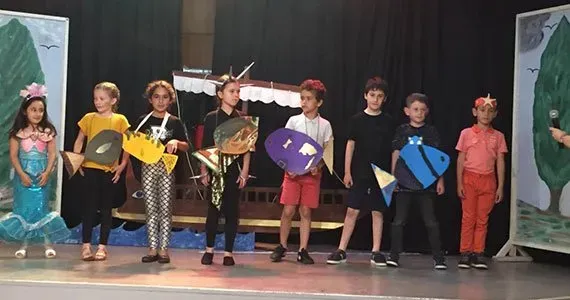
Pupils learn about Greece and Cyprus not as distant places, but as their own heritage — exploring how people there live, both today and in the past, and the traditions, beliefs and customs that shape national identity. Rather than learning about culture from the outside, our pupils actively live it, through in-class activities, cultural workshops, and school and community events that let them experience and take part in Greek life first-hand. This hands-on, immersive approach reflects our wider belief that language learning is most meaningful when it's rooted in real cultural connection.
Greek music and dance
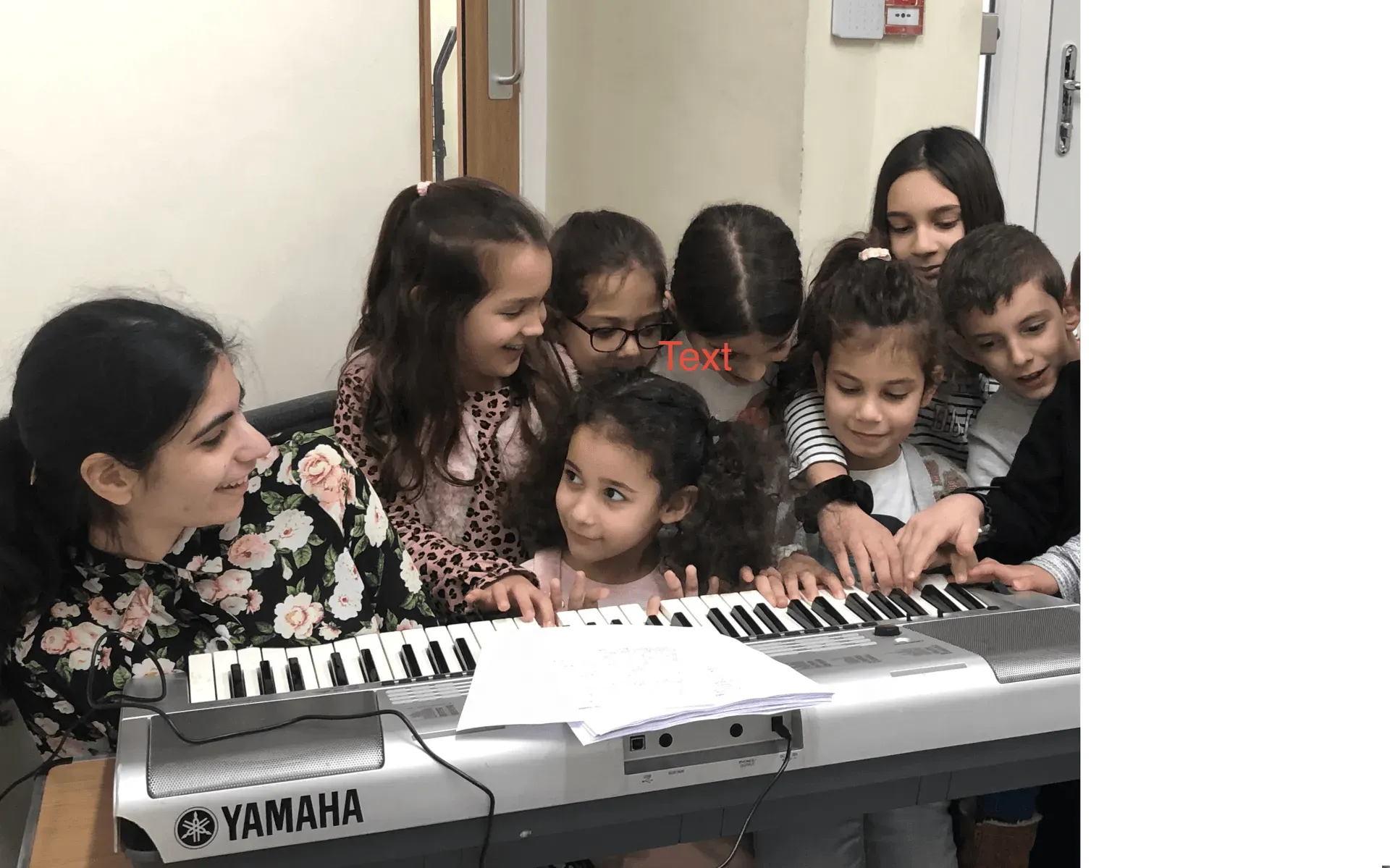
Music and dance bring language and culture together in one of the most joyful ways our pupils experience Greek heritage. Taught on Saturdays by experienced specialist teachers, our pupils learn traditional Greek songs and dances, discovering not just the steps and melodies but the stories, origins, and meaning behind them. Through singing and dancing together, pupils build confidence, creativity, and a shared sense of community — carrying their Greek heritage forward not just as something they've studied, but something they feel part of.
GCSE
GCSE in Modern Greek
The study of modern Greek at GCSE level is a stimulating course popular with both English and Greek-speaking candidates. Students develop their reading, writing, listening and speaking skills through the study of wide-ranging topics relevant to their age and interest.
Studying modern Greek will enable students to:
• Develop their communications skills in both speech and writing
• Understand and express their thoughts and ideas in spoken and written Greek
• Deepen their knowledge on the use of the language in different contexts and enrich their vocabulary
• Develop awareness and understanding of the culture and identity of Greek-speaking countries and communities
• Stimulate bilingual learning
• Lay the foundations for further study and use of a modern language in their personal and professional lives
The course is available at a foundation tier and at a higher tier and is run over two to three years depending on prior knowledge. Further information on the course curriculum is available at:
For further information and how to enrol please contact:
greekschoolsecretary@gmail.com

GCSE in Classical Greek
Classical Greek is an exciting subject that will help students develop their understanding of the classical Greek language, literature and culture through the study of original sources. Through the course students will develop the language skills to understand and interpret classical Greek, study prose and verse literature in the original language, and learn about the society and culture of ancient Greece.
Studying classical Greek will enable students to:
• Develop linguistic skills that will deepen their understanding of language structure and the relationship between classical Greek and modern languages
• Appreciate the breadth and depth of classical Greek literature
• Enhance their critical and analytical skills and independent thinking ability
• Develop insights into a culture that has inspired and shaped much of western civilisation
• Build foundations for further study in classics, but also in arts, humanities and sciences
Our course is open to English and Greek speaking students and is run remotely through a combination of live teaching and home learning. The course fee is £395 per year for two-hour lessons during term time and runs over two years. We hope that the course will instil lifelong enthusiasm for the study of the classical world.
Further information on the GCSE in classical Greek curriculum is available at:
https://www.ocr.org.uk/Images/220700-specification-accredited-gcse-classical-greek-j292.pdf
For more information on the course and how to enrol, please contact:
greekschoolsecretary@gmail.com
A Level
Our new Greek Level 3 (A-Level)Advanced GCE class has been developed to inspire all students to have an appreciation of the language, literature, film, and culture of Greece and Cyprus. We have designed a motivating and inspirational course of study that will enable students to develop advanced level knowledge and understanding of the Greek language, the culture of Greece and Cyprus, as well as practical and valuable language and transferable study skills. Αlso, this course will help to prepare students for higher education and enhance their employability profile.
The Pearson Edexcel Level 3 Advanced GCE in Greek (listening, reading, and writing) consists of three externally examined papers that assess listening, reading, and writing skills.
Paper 1: Translation into English, Reading comprehension & Writing (research question)
Paper 2: Translation into Greek & Written response to works (Literary texts & films)
Paper 3: Listening, Reading & Writing in Greek
We offer:
- Ηistorical research in PowerPoint presentations
- Literary text analysis in PowerPoint presentations
- Texts for reading comprehension
- Step-by-step guide on how to respond to each question to get full points.
- Flashcards – Vocabulary
- Potential questions/ model answers
- Mock tests
Further information on the course curriculum is available here.
Η τάξη Ελληνικών επιπέδου 3 (A-Level) Advanced GCE έχει σχεδιαστεί ώστε όλοι οι μαθητές να κατανοήσουν την αξία της γλώσσας, της λογοτεχνίας, του κινηματογράφου και του πολιτισμού της Ελλάδας και της Κύπρου. Δημιουργήσαμε ένα συναρπαστικό και ενδιαφέρον πρόγραμμα σπουδών, το οποίο θα καταστήσει τους μαθητές ικανούς να αναπτύξουν τις γνώσεις τους, να κατανοήσουν βαθειά την ελληνική γλώσσα καθώς και τον πολιτισμό της Ελλάδας και της Κύπρου σε προχωρημένο επίπεδο, και να να αποκτήσουν ποικίλες γλωσσικές δεξιότητες. Επίσης, το εν λόγω πρόγραμμα θα προετοιμάσει τους μαθητές για την τριτοβάθμια εκπαίδευση και θα ενισχύσει το βιογραφικό τους στην ανταγωνιστική αγορά εργασίας.
Το Pearson Edexcel Level 3 Advanced GCE στα Ελληνικά αποτελείται από τρία εξεταζόμενα παραρτήματα (?) τα οποία αξιολογούν δεξιότητες ακρόασης, ανάγνωσης και γραφής.
Paper 1: Μετάφραση στα αγγλικά, Κατανόηση γραπτού λόγου (κειμένων)και κριτική ανάλυση (ερευνητικό ερώτημα)
Paper 2: Μετάφραση στα ελληνικά & γραπτή ανάλυση σε λογοτεχνικά κείμενα & ταινίες
Paper 3: Ακρόαση, κατανόηση γραπτού λόγου (κειμένων) & γραπτό λόγο στα ελληνικά
Το πρόγραμμά μας προσφέρει :
- Ιστορική ανασκόπηση και έρευνα σε παρουσιάσεις PowerPoint
- Ανάλυση Λογοτεχνικών κειμένων σε παρουσιάσεις PowerPoint
- Ποικίλα Κείμενα για την κατανόηση κειμένου
- Βήμα προς βήμα οδηγός για το πώς να απαντήσετε σε κάθε ερώτηση ώστε να πάρετε πλήρεις βαθμούς.
- Κάρτες Λεξιλολίου
- Πιθανές ερωτήσεις/ υποδειγματικές απαντήσεις
- Δοκιμαστικά τεστ
Περισσότερες πληροφορίες σχετικά με το πρόγραμμα σπουδών είναι διαθέσιμες εδώ
Ellinomatheia
We are pleased to announce that our school has been approved as an examination centre for the Certification of Attainment in Greek. The Certificate of Attainment in Greek is the officially recognised certificate that confirms knowledge of Greek as a second language.
Format and the content of the examination
There are six levels (Α1-C2) of attainment and four skills are examined: listening and reading comprehension, writing, and speaking. The three higher levels, apart from the four language skills, examine the Use of Language focusing on grammar (morphology and syntax) and on vocabulary. These levels are aligned with the Common European Framework of Reference for Teaching Foreign Languages.
Utility of the Certificate of Attainment in Greek. Levels A1 and A2 correspond to elementary and basic language knowledge respectively. Level B2 certification holders can register at a Greek institution of higher education. Level C1 certification holders can prove very good knowledge of the Greek language, which is a prerequisite for appointment in civil service positions and other organisations. It serves as proof of the level of attainment in Greek in the work market.
In the recent years, students living outside Greece are increasingly interested in taking part in the examinations to obtain official certification of Greek language proficiency.
We believe that sitting the exams increases pupils’ interest and motivation. It also enables them to meet a new challenge and gain confidence.
Please find below the dates and fees for the upcoming examinations for the Certificates of Attainment in Greek. Registrations are held from the 1st February to 20th March 2022.
How to register
Applicants (internal and external) must register using the following link:
http://www.greek-language.gr/certification/application/index.html
Please note the following:
- On the page “exam centre” (εξεταστικό κέντρο) please search for our school using code 44011
- On the page “exam fee payment” (πληρωμή εξέταστρων) in the fields deposit details (στοιχείακατάθεσης) please fill in as below:
Payment reference: if you don’t have the payment reference please use the school’s code number 44011
Reference: ELL – level of exam to be taken – surname of the candidate. For example: ELL A2 PAPADOPOULOS
Amount: depending on the exam level please type 65 or 73. Please note that the payment must be made in Pounds.
Date of deposit: Chose the date the transfer was made.
Please address any queries relating to the exam to:
exams@greekschoolleeds.org.uk
Βρισκόμαστε στην ευχάριστη θέση να σας ανακοινώσουμε ότι το σχολείο μας έχει αναγνωριστεί ως εξεταστικό κέντρο για την Πιστοποίηση Επάρκειας της Ελληνομάθειας. Το Πιστοποιητικό Ελληνομάθειας είναι το επίσημο πιστοποιητικό που επιβεβαιώνει τη γνώση της ελληνικής ως δεύτερης γλώσσας.
H δομή και το περιεχόμενο των εξετάσεων
Τα επίπεδα της Ελληνομάθειας ιεραρχούνται από το επίπεδο Α1 (στοιχειώδης γνώση) μέχρι και το επίπεδο Γ2 (άριστη γνώση). Σε όλα τα επίπεδα εξετάζονται τέσσερις γλωσσικές δεξιότητες: κατανόηση και παραγωγή προφορικού και γραπτού λόγου. Στα πιο προχωρημένα επίπεδα εξετάζεται επιπλέον η χρήση της γλώσσας -εστιάζοντας στην γραμματική (μορφολογία και σύνταξη) και στο λεξιλόγιο. Τα επίπεδα αυτά δομούνται σύμφωνα με το κοινό ευρωπαϊκό πλαίσιο γλωσσομάθειας.
Η χρηστικότητα της ελληνομάθειας. Τα επίπεδα Α1 και Α2 επιβεβαιώνουν τη στοιχειώδη και βασική γνώση Ελληνικών αντίστοιχα. Το επίπεδο Β2 δίνει στους κατόχους την δυνατότητα να σπουδάσουν σε ελληνικό ανώτατο εκπαιδευτικό ίδρυμα. Το επίπεδο Γ1 επιβεβαιώνει τη γνώση της ελληνικής γλώσσας σε πολύ καλό επίπεδο που είναι αναγκαία προϋπόθεση για διορισμό σε θέσεις δημόσιας διοίκησης και άλλους οργανισμούς. Γενικά, χρησιμεύει για επαγγελματικούς σκοπούς στην αγορά εργασίας σε ευρωπαϊκό πλαίσιο.
Τα τελευταία χρόνια όλο και περισσότεροι μαθητές που διαμένουν εκτός Ελλάδος ενδιαφέρονται για τις εξετάσεις Ελληνομάθειας προκειμένου να κατοχυρώνουν ένα αναγνωρισμένο πιστοποιητικό επάρκειας Ελληνικής γλώσσας.
Ως εκπαιδευτικοί, πιστεύουμε ότι οι εξετάσεις είναι σπουδαίο κίνητρο για μελέτη και επανάληψη. Επιπλέον, οι μαθητές δοκιμάζουν τις δυνάμεις τους, εξοικειώνονται με το πνεύμα των εξετάσεων και αποκτούν περισσότερη αυτοπεποίθηση.
Παρακάτω παρατίθενται οι ημερομηνίες διεξαγωγής των εξετάσεων για το έτος 2022 καθώς και τα εξέταστρα. Oι εγγραφές γίνονται από την 1η Φεβρουαρίου μέχρι τις 20 Μαρτίου.
Τρόπος εγγραφής
Οι ενδιαφερόμενοι παρακαλούνται να δηλώσουν συμμετοχή μέσω του παρακάτω συνδέσμου:
http://www.greek-language.gr/certification/application/index.html
Διευκρινίζουμε τα παρακάτω για τη συμπλήρωση της αίτησης:
- στη σελίδα “εξεταστικό κέντρο” παρακαλούμε αναζητήσετε το σχολείο μας με τον κωδικό 44011
- στη σελίδα “πληρωμή εξέταστρων” στο πεδίο “στοιχεία κατάθεσης” παρακαλούμε συμπληρώστε:
Αριθμός κατάθεσης: εάν δεν έχετε αριθμό κατάθεσης συμπληρώστε με τον κωδικό του σχολείου 44011
Αιτιολογία κατάθεσης: ELL – το επιπεδο που θα εξεταστεί ο υποψήφιος – το επωνυμο του υποψηφίου. Για παράδειγμα : ELL A2 PAPADOPOULOS
Ποσό κατάθεσης: ανάλογα με το επίπεδο του εξεταζόμενου συμπληρώνετε 65 ή 73. Η πληρωμή θα πρέπει να γίνει σε λίρες Αγγλίας.
Ημερομηνία κατάθεσης: Επιλέγετε την ημερομηνία που έγινε η κατάθεση.
Για περισσότερες πληροφορίες παρακαλούμε επικοινωνήστε με:
exams@greekschoolleeds.org.uk